Cleanrooms play a critical role in industries where airborne contamination can affect product quality, research accuracy, or manufacturing safety. From pharmaceutical production and biotechnology research to semiconductor manufacturing and medical devices, a properly designed cleanroom provides a controlled environment that minimizes particles, microorganisms, and other contaminants.
If you are planning a new laboratory or manufacturing facility, understanding cleanroom design, cleanroom classification, and international standards is essential. This guide explains the fundamentals of ISO cleanrooms, the requirements of ISO 14644, and key considerations when designing a modern GMP cleanroom.
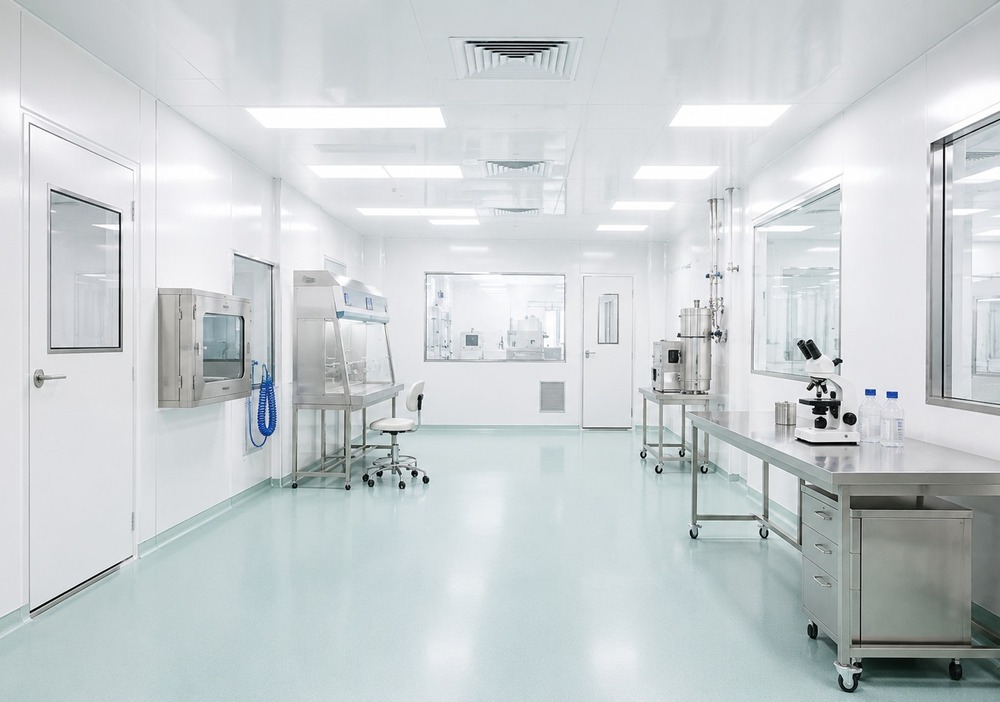
What Is a Cleanroom?
A cleanroom is a specially engineered space where the concentration of airborne particles is controlled within specified limits. Temperature, humidity, air pressure, airflow direction, and cleanliness are carefully managed to create a stable working environment.
Unlike a conventional laboratory or workshop, a cleanroom uses high-efficiency filtration systems, controlled air circulation, and specialized construction materials to reduce contamination risks.
Cleanrooms are widely used in:
- Pharmaceutical manufacturing
- Biotechnology laboratories
- Medical device production
- Semiconductor and electronics industries
- Research laboratories
- Food and beverage testing laboratories
Understanding ISO Cleanroom Classification
The most widely accepted international standard for ISO cleanrooms is ISO 14644. This standard defines cleanroom performance based on the maximum allowable concentration of airborne particles.
The most common cleanroom classifications include:
|
ISO Class
|
Typical Applications
|
|
ISO Class 5
|
Aseptic filling, semiconductor manufacturing
|
|
ISO Class 6
|
Precision manufacturing
|
|
ISO Class 7
|
Pharmaceutical laboratories, clean assembly
|
|
ISO Class 8
|
Research laboratories, packaging areas
|
Lower ISO class numbers indicate cleaner environments with stricter particle limits.
Choosing the correct cleanroom classification depends on the production process, product sensitivity, and applicable industry regulations.
ISO 14644 Requirements
ISO 14644 provides the technical framework for designing, testing, and maintaining cleanrooms.
The standard covers several important aspects, including:
- Airborne particle concentration
- Airflow performance
- Pressure differentials
- Air filtration efficiency
- Environmental monitoring
- Periodic cleanroom testing
Compliance with ISO 14644 helps ensure that cleanroom performance remains consistent throughout its operational life.
GMP Cleanroom Design
For pharmaceutical and biotechnology facilities, meeting ISO standards alone is often not enough. Many projects must also comply with Good Manufacturing Practice (GMP) requirements.
A well-designed GMP cleanroom considers not only cleanliness but also product quality, operator safety, and regulatory compliance.
Typical GMP cleanroom design features include:
- Smooth, easy-to-clean wall panels
- Flush-mounted doors and windows
- HEPA-filtered supply air
- Controlled pressure cascades
- Dedicated personnel and material flow
- Hygienic lighting and ceiling systems
Effective cleanroom design minimizes contamination risks while supporting efficient daily operations.
Key Elements of Cleanroom Design
Successful cleanroom design involves much more than selecting wall panels or air filters. Every engineering system must work together as one integrated solution.
Important design considerations include:
Airflow and Ventilation
Proper airflow is the foundation of every cleanroom. High-efficiency HVAC systems provide filtered supply air while maintaining appropriate pressure differentials between adjacent rooms.
Cleanroom Construction Materials
Wall panels, ceilings, flooring, doors, and windows should be durable, non-particle shedding, and easy to disinfect.
Utility Integration
Electrical systems, gas piping, compressed air, purified water, and process utilities should be carefully coordinated during the design stage to avoid future modifications.
Laboratory Furniture
Laboratory benches, storage cabinets, and equipment should be compatible with cleanroom environments and designed to minimize particle generation.
Why Choose a Modular Cleanroom?
Many organizations are now choosing a modular cleanroom instead of traditional construction.
A modular cleanroom offers several advantages:
- Faster installation
- Flexible expansion
- Reduced construction time
- Factory-prefabricated components
- Easier future modification
- Lower disruption to existing facilities
Because many components are manufactured and pre-assembled before delivery, modular cleanrooms provide more consistent quality while reducing on-site installation time.
For laboratories and manufacturing facilities that require rapid deployment or future scalability, a modular cleanroom is often the preferred solution.
Choosing the Right Cleanroom Solution
Every cleanroom project is unique. Factors such as industry standards, production processes, available space, and future expansion plans all influence the final design.
Working with an experienced laboratory engineering partner can help ensure that the cleanroom meets operational requirements while complying with ISO and GMP standards. From planning and engineering to manufacturing and installation, a complete turnkey approach helps improve project efficiency and long-term performance.
Conclusion
A high-performance cleanroom is built on thoughtful planning, professional engineering, and compliance with internationally recognized standards such as ISO 14644. Whether you require an ISO cleanroom for research, a GMP cleanroom for pharmaceutical production, or a flexible modular cleanroom for industrial applications, careful cleanroom design is essential to achieving reliable environmental control and operational success.
By understanding cleanroom classification, ventilation requirements, construction materials, and utility integration, organizations can create cleanroom facilities that are efficient, compliant, and ready to support future growth.


